
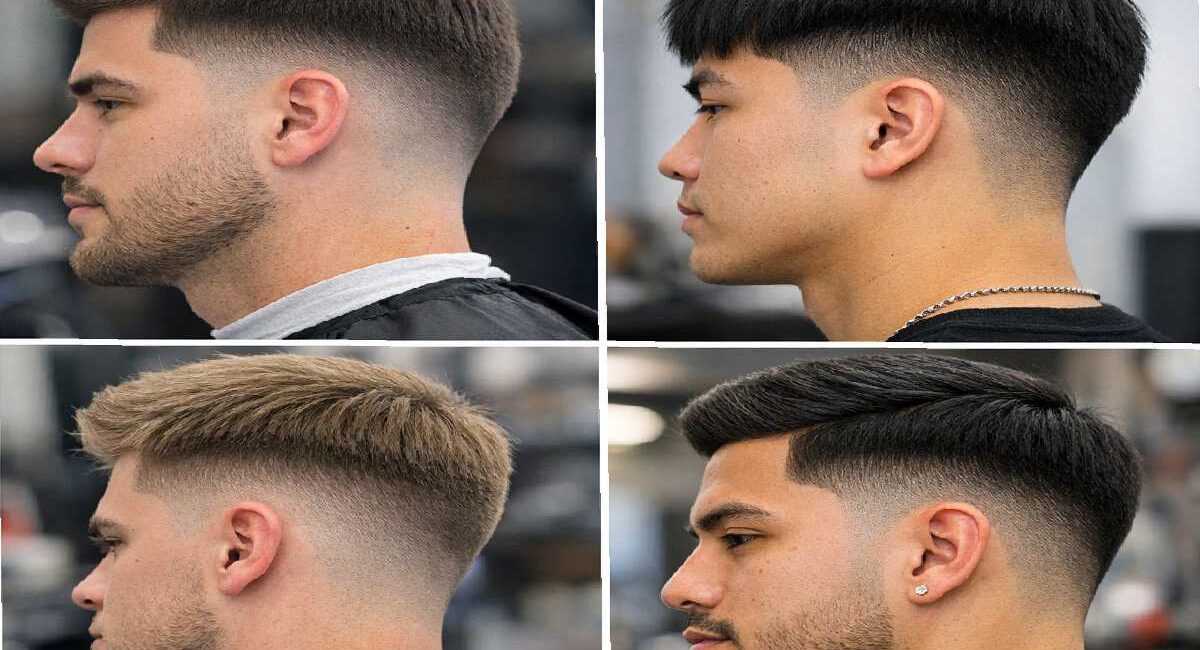
A low taper fade on straight hair works best when it’s treated as a shape-control haircut, not just a fade—because straight hair exposes every mistake, blend line, and imbalance.
In reality, a fade that seems smooth on Instagram may be harsh, boxy, or incomplete. The result is understanding how a low taper actually performs on straight hair, and how barbers correct technique, and how you should choose differences based on face shape, hair density, and lifestyle.
The response is obvious: straight hair appears nice with a low taper fade if the taper is delicate, the blend is lengthier, and the top is firmly shaped rather than an afterthought.
Key Takeaways
- Straight hair makes fade mistakes more visible, not less.
- A low taper fade works best with gradual blending and controlled edges.
- The top haircut matters more than the fade itself.
- Face shape and hair density should guide taper height.
- Maintenance frequency is a real trade-off most guides ignore.
Who This Article Is For
This is for you if:
- You’re a beginner trying to understand what to ask your barber.
- You want a clean, professional fade that grows out well.
- You have straight hair that shows harsh lines easily.
This is not for you if:
- You want an ultra-high, skin-tight fade.
- You prefer messy, textured, or curly styles that hide blending.
What Is a Low Taper Fade
A low taper fade gradually shortens the hair around:
- The neckline
- The sideburns
- The area just above the ears
Unlike a low fade, it does not climb high up the head. On straight hair, this matters because straight strands fall uniformly and reflect light evenly, making contrast sharper.
Key distinction:
- Low fade: visible gradient up the sides
- Low taper: controlled cleanup at the edges with minimal contrast
For straight hair, taper > fade in terms of forgiveness.
Why Straight Hair Changes the Fade Game
Straight hair has three characteristics that affect tapers:
- Uniform strand direction – no natural camouflage
- High reflectivity – lines show faster
- Weight distribution – bulk builds quickly on the sides
This is why many barbers trained on textured hair struggle with straight hair tapers unless they adjust their approach.
High-authority grooming educators like Schorem Barber School, Vidal Sassoon Academy, and American Crew Education consistently emphasize shape control over clipper theatrics for straight hair.
Low Taper Fade Variations for Straight Hair
- Low Taper Fade with Short Top
- Best for: thin to medium density hair
- Look: clean, sharp, low maintenance
- Risk: can look flat without proper top shaping
- Low Taper Fade with Medium-Length Top
- Best for: professionals, everyday wear
- Allows side-swept, textured, or brushed styles
- Most forgiving grow-out
- Low Taper Fade with Long Straight Hair
- Best for: high density hair
- Requires thinning and weight removal
- Without debulking, sides will mushroom
Choosing the Right Low Taper Based on Face Shape
| Face Shape | Recommended Taper Adjustment | Why |
| Round | Slightly higher taper curve | Adds vertical structure |
| Oval | Classic low taper | Balanced proportions |
| Square | Softer edges, less skin | Avoids boxy look |
| Long | Keep taper very low | Prevents elongation |
This qualitative framework matters more than copying a photo.
Barber Technique That Makes or Breaks It
Straight hair requires longer blend zones.
What works:
- Clip-over-comb instead of guard jumping
- Scissor blending near the parietal ridge
- Soft trimmer work, not sharp outlines
Common failure patterns:
- Skin too high on the neck
- Harsh C-cups around the ear
- Ignoring bulk above the taper
These are the reasons people say, “It looked good for a week, then weird.”
Maintenance Reality
A low taper fade on straight hair:
- Looks sharp for ~2–3 weeks
- Grows out cleaner than mid/high fades
- Still needs neckline cleanup
Maintenance comparison:
| Style | Touch-ups Needed | Grow-Out Quality |
| Low taper fade | Every 3–4 weeks | Smooth |
| Mid fade | Every 2–3 weeks | Noticeable |
| High fade | Weekly to bi-weekly | Harsh |
Styling Products That Actually Work
Straight hair doesn’t need heavy hold.
Best options:
- Light matte clay (for structure)
- Cream pomade (for natural movement)
- Texture lotion (for fine hair)
Avoid greasy or wet products—they exaggerate scalp contrast.
Brands often recommended in professional education circles include Hanz de Fuko, Layrite, and American Crew, but technique matters more than brand.
How to Ask Your Barber
Instead of saying:
“Low taper fade.”
Say this:
“I want a low taper around the ears and neck, keep it subtle, longer blend, no high skin fade. Control the bulk on the sides.”
That one sentence prevents 80% of bad outcomes.
Common Myths About Low Taper Fades on Straight Hair
- Myth: Straight hair is easier to fade
→ Reality: It’s less forgiving. - Myth: Lower fade = less maintenance
→ Reality: Cleaner grow-out, not maintenance-free. - Myth: Any barber can do it
→ Reality: Technique matters more than tools.
Regional Nuance
- In the US, low tapers are often paired with sharp line-ups.
- In Europe, especially UK barbershops, blends are softer and longer.
Neither is “right”—but expectations differ.
Final Take
A low taper fade on straight hair is less about fading skill and more about restraint, proportion, and shape control. When done right, it’s one of the cleanest, most versatile haircuts available. When done wrong, it’s instantly obvious. Understand the trade-offs, communicate clearly, and prioritize subtlety over drama—that’s the real truth behind this haircut.