
Have you ever purchased a beauty product with the term “second skin” on the label? This phrase is a common descriptor because it’s one that refers to how the product should appear and feel immediately after application. It shouldn’t feel or look like a heavier, obvious layer of makeup. The real goal, of course, is to make the face look “better,” but that term doesn’t just apply to makeup.
This Article Is Belongs To The Makeup Products
What Is Second Skin?
Where have you heard “second skin”? If you’re searching for a lightweight, natural finish that matches your skin’s look and feel, it’s totally clutch. But, here’s the thing: it’s actually not one particular product. Ready to discover what this whole thing is all about?
What are my best protections for cosmetics? Do not share makeup, clean your makeup brushes and follow the manufacturer‘s recommended storage time. For information about the safe use of cosmetics visit.
How Does Second Skin Work?
The outcome hinges on the formula’s consistency, coverage and components. Lighter formulas are typically simpler to distribute as an ultra-thin layer, enabling some of the appearance of the skin’s structure to show through.
Have you ever wondered just how much product you need? Rather than lathering it all on at once, put it on slowly. You’ll probably only need a small amount for light evening wear and a little more for areas you want additional coverage.
Key Features to Look For
If the product is to be for a second skin finish, select with the features in your mind and don‘t just select by the description on the pack.
Lightweight Texture
A light thinned, spreadable formula can work towards a more realistic look. Cream formulations of serum-like and thin body consistency work well for this finish.
Suitable Coverage
Coverage can be sheer to medium or even buildable coverage. If you would like to cover up large imperfections/blemishes or pigmentation make sure to find out about the products stated coverage before purchasing.
Natural Finish
A natural finish should not necessarily mean completely matte or completely dewy. Some products leave a soft, skin-like finish, while others have more noticeable radiance.
Shade Selection
Good color match is important. A formula that is too light or too dark, no matter how lightweight, can appear quite contrasting if it is extreme.
Formula
Always examine the ingredient list: and if you have sensitive skin or have ever known that any individual cosmetic ingredients would not agree with you.
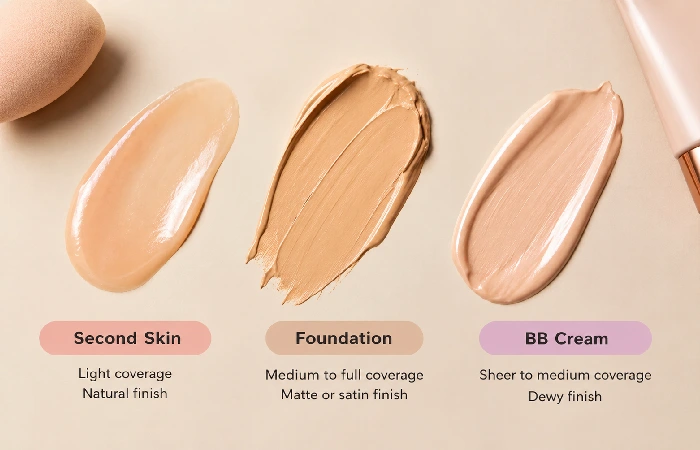
Second Skin vs Other Beauty Products
| Feature | Second-skin finish | Traditional foundation | Tinted moisturiser | BB cream |
| Typical coverage | Sheer to medium | Light to full | Sheer | Sheer to light |
| Appearance | Natural and skin-like | Varies | Natural | Natural |
| Texture | Usually lightweight | Varies | Lightweight | Lightweight |
| Everyday use | Yes | Depends on formula | Yes | Yes |
| Buildable | Often | Often | Usually limited | Usually limited |
| Main focus | Natural appearance | Coverage and complexion | Moisture + tint | Tint + skincare-style benefits |
These categories can overlap. A product may provide foundation-like coverage while still being described as having a second-skin finish.
How to Apply It
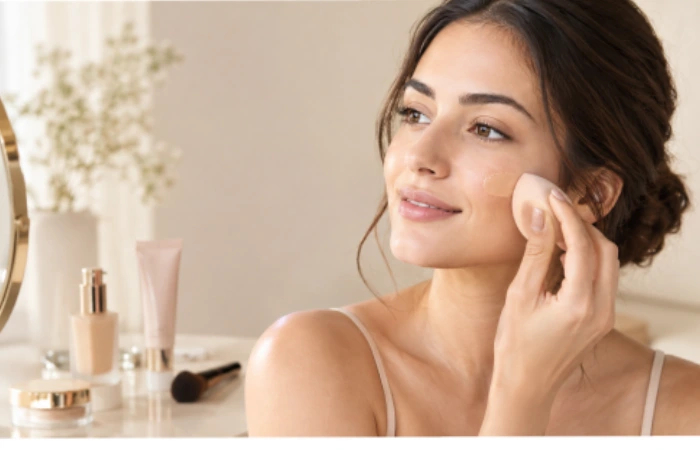
Creating a natural result is also not only about the product. Application technique is also matters.
Step 1: Prepare the skin.
Cleanse and moisturise as you normally do. Allow a moment for your skincare to sink in before applying your foundation.
Step 2: Start with a small amount.
Apply a small amount, rather than a thick layer all over the face straight away.
Step 3: Blend gradually.
Apply using clean fingers, a makeup sponge or an appropriate brush, according to the formula.
Step 4: Add coverage selectively.
If certain areas need more coverage, apply another thin layer only where necessary.
Step 5: Check the result.
Look at your complexion in natural light. This can give you a better idea of whether additional product is actually needed.
What Results Should You Expect?
A second-skin finish is meant to be natural in appearance and not to hide all evidence of pores, pigmentation, scarring or skin texture.
The longevity will vary depending on the product, your skin type, how much you wear and the environment you wear it in. Heat, humidity, sweat and oiliness can all alter a product’s shelf life.
Pros and Limitations
Advantages
- Lightweight feel
- Natural-looking appearance
- Suitable for everyday routines
- Can be easy to blend
- Allows some natural skin texture to remain visible
- Can work well with minimal makeup
Limitations
- May not provide enough coverage for prominent blemishes
- Wear time varies between products
- Some formulas may not suit very oily or very dry skin
- Shade matching is still important
- Certain ingredients may irritate sensitive skin
Safety and Skin Considerations
Have sensitive skin? You’re not in the minority! Be sure to go through the ingredient list for everything you use and take it easy with new products.
What are my best protections for cosmetics? Do not share makeup, clean your makeup brushes and follow the manufacturer‘s recommended storage time. For information about the safe use of cosmetics visit.
Buying Tips
Before purchasing, consider:
- Coverage: Decide how much complexion correction you actually need.
- Finish: Choose between natural, radiant or more matte-looking formulas according to your preference and skin type.
- Shade: Check the shade in natural lighting where possible.
- Ingredients: Read the ingredient list if you have known sensitivities.
- Packaging: Purchase from a reputable retailer and check that the packaging is intact.
- Expectations: Remember that lightweight products generally prioritise a natural appearance over maximum coverage.
Alternatives to Second Skin
If a lightweight finish is not what you need, several alternatives are available.
A traditional foundation may be more appropriate when stronger coverage is required. A tinted moisturiser may suits those who mostly looking for moisturising with a bit of colour. BB is a light coverage foundation with the ingredients of skincare.
FAQ’s
What does second skin mean?
The term ‘second skin’ is often used to refer to a product or finish which mimics the look and texture of typical skin. In styling, it is used to imply a result which is light or discreet.
Is second skin suitable for everyday use?
It can be. Light-weight products with a more natural look can be right for daily use, but it all depends on what your skin type is and what you prefer.
Does second skin provide full coverage?
Not at all. Most of the products labeled as ‘second-skin’ type coatings happen to be sheer or light-to-medium coverage, so definitely read the product description before investing.
Can second skin work on sensitive skin?
Yes it can, but it doesn‘t mean that this particular product is hypoallergenic. Always check the ingredients and do patch test whenever using a different product.
How long does second skin last?
No maximum wear time. Duration of life is dictated by formula, skin type, prep, weather, sweating and application.
Conclusion
Meet “nofollow “. This is about a makeup finish that offers a really natural and lightweight effect. Same even finish but some of the textured finish of your skin is still visible. That really nice polished finish without it looking like your makeup is covering your skin?
Depending on your needs, the right products may vary. Think about coverage, finish, ingredients, shade and wear time expectations before purchasing. Ultimately, being realistic is key: if you want coverage you will need a heavier product than a wispy, light formula can give you.