
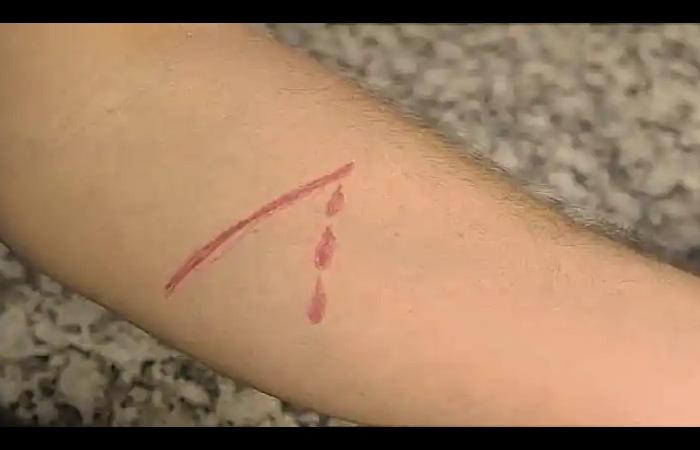
What Does “Hand Kata Love Cuts” Mean?
“Hand kata love cuts” is an informal phrase used online to describe cutting or injuring the hand as an expression of intense emotional pain, attachment, heartbreak, or supposed romantic devotion. Although some people may describe the behavior as proof of love, deliberately hurting yourself is not a healthy way to communicate feelings.
Self-harm can be associated with overwhelming emotions, relationship difficulties, trauma, or other psychological distress. The behavior should be taken seriously rather than treated as a romantic gesture.
This Article Is Belongs To The Self Care
Healthier Ways to Express Love and Emotional Pain
Love can be expressed without causing physical harm. Someone experiencing heartbreak or overwhelming emotions can try alternatives such as:
- Talking honestly with a trusted friend
- Writing down feelings
- Taking a walk or doing physical activity
- Practicing breathing or grounding exercises
- Taking some distance from a toxic relationship
- Speaking with a counselor or psychologist
- Reading positive and meaningful truth of life quotes for perspective and emotional encouragement
- Building a support network outside the relationship
Signs That Someone May Need Help
A person who is struggling may show changes that go beyond the cuts themselves. Possible warning signs include:
- Unexplained cuts or injuries
- Frequently covering their arms or hands
- Talking about feeling hopeless, worthless, or overwhelmed
- Extreme fear of rejection or abandonment
- Increasing isolation from friends and family
- Sudden changes in mood or behavior
- Saying that they cannot cope without a particular person
- Threatening to hurt themselves during relationship conflicts
One sign alone does not prove why someone is self-harming, but repeated self-injury should always be taken seriously.
What Should You Do If Someone Has Cut Their Hand?
If someone has recently injured themselves, focus first on their immediate safety rather than judging or arguing with them.
Stay calm and listen without criticism. You can say something simple such as, “I’m here with you. Let’s get you some help.”
If the wound is deep, bleeding heavily, has damaged a major blood vessel, causes numbness, or does not stop bleeding with firm pressure, seek emergency medical care immediately.
For less severe injuries, the person should still consider speaking with a doctor or mental-health professional, especially if self-harm has happened more than once.
How to Support Someone Without Encouraging Self-Harm
Supporting someone does not mean agreeing with or rewarding self-harm. Helpful approaches include:
- Listen without making fun of them
- Avoid threats, blame, or shame
- Encourage professional support
- Help them identify safer ways to handle intense emotions
- Stay connected with them when they are struggling
- Take statements about suicide or serious self-harm seriously
- Contact emergency services if there is an immediate danger
You should not promise to keep a serious self-harm or suicide threat secret.
Healthier Ways to Express Love and Emotional Pain
Love can be expressed without causing physical harm. Someone experiencing heartbreak or overwhelming emotions can try alternatives such as:
- Talking honestly with a trusted friend
- Writing down feelings
- Taking a walk or doing physical activity
- Practicing breathing or grounding exercises
- Taking some distance from a toxic relationship
- Speaking with a counselor or psychologist
- Building a support network outside the relationship
These approaches may not make difficult emotions disappear immediately, but they can provide safer ways to manage them.
Is Cutting Yourself Proof of Love?
No. Hurting yourself is not evidence that your love is stronger or more genuine.
Healthy love involves respect, communication, boundaries, trust, and emotional safety. A relationship should not require either person to injure themselves to prove commitment.
If someone is asking you to hurt yourself to prove that you love them, that is a serious warning sign and deserves attention.
When to Seek Urgent Help
Self-harm can sometimes occur alongside suicidal thoughts, although not everyone who self-harms intends to die. Any mention of suicide, a plan to die, a serious injury, or an inability to stay safe should be treated as an emergency.
If you or someone else is in immediate danger, contact your local emergency service or go to the nearest emergency department. If possible, stay with the person and move away from anything they could use to seriously hurt themselves.
Remember: heartbreak can be painful, but hurting your body is not a solution. Getting support is a much safer way to deal with overwhelming emotions.